


Why Your Room Still Echoes: 7 Causes and What Fixes It
If you are asking why does my room echo, the room likely still has more reflective surface than useful absorption. Glass, drywall, hard floors, ceilings, and large tables can keep returning sound after someone speaks, even when the room is furnished or already has a few panels.
The first step is not to add products at random. Identify what you hear, where it is strongest, and whether the problem is sound lingering inside the room or sound moving between rooms. Those symptoms lead to different solutions.
Quick Answer: Why Does My Room Echo?
A room echoes when sound reflects from hard surfaces and remains audible instead of decaying quickly. If the echo remains after adding furniture or acoustic panels, one of four issues is usually responsible:
- There is not enough absorptive coverage for the room.
- The treatment is not placed along the strongest reflection paths.
- The ceiling or another large hard surface remains untreated.
- The sound you hear is background noise or sound transfer rather than echo.
Echo is a distinct reflected repeat. Reverberation is the broader persistence of many reflections after the original sound. In everyday conversation, people often use "echo" for both. The practical goal is the same: identify the surfaces keeping sound active and add useful absorption where it will matter.
Start With What You Hear
A short description of the symptom is more useful than guessing how many panels the room needs.
| What You Hear | Likely Cause | First Area To Inspect |
|---|---|---|
| A fast metallic ring after a clap | Flutter echo between parallel hard surfaces | Opposing walls or the floor-to-ceiling path |
| Speech stays in the room and becomes hard to follow | Longer reverberation from insufficient absorption | Large bare walls, glass, ceiling, and floor |
| Calls or recordings sound hollow at one position | Nearby early reflections | Side walls, wall behind the desk, and ceiling above |
| A steady hum continues even when nobody speaks | Background noise rather than echo | HVAC, appliances, equipment, and exterior noise |
| Voices are clear in the room but audible through the door | Sound transfer or an air gap | Door perimeter, door bottom, and adjacent construction |
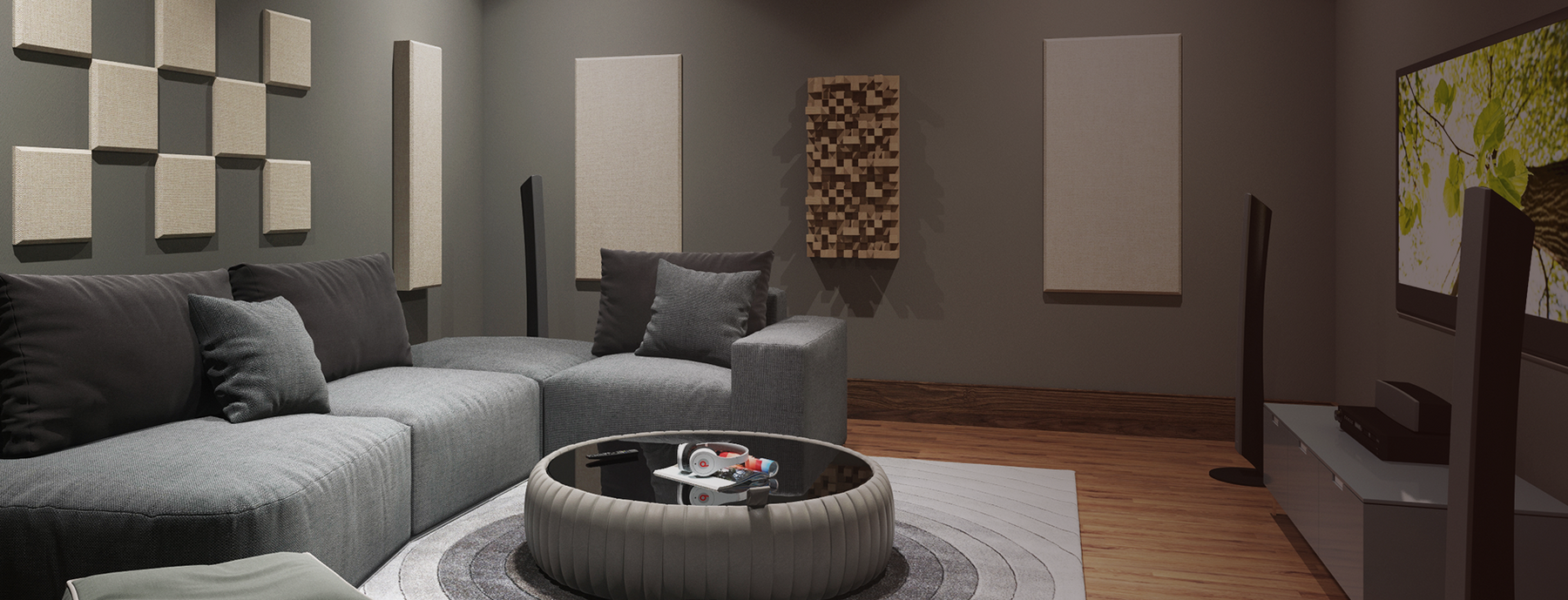
7 Reasons Your Room Still Echoes
1. The Room Has Too Many Hard Surfaces
Sound reflects efficiently from glass, painted drywall, concrete, tile, hardwood, and other rigid finishes. A modern room can look complete while remaining acoustically bare, especially when large windows, an exposed ceiling, or minimal furnishings dominate the space.
Look for uninterrupted hard areas around the main speaking, listening, or recording position. Those surfaces are often more important than small decorative objects elsewhere in the room.
2. There Is Not Enough Useful Coverage
A few panels may improve a small zone without changing the room as a whole. The amount of treatment required depends on room volume, ceiling height, surface materials, furnishings, and how the room is used. A tall open-plan living space usually needs more distributed absorption than a compact furnished office.
This is why one universal panel count is unreliable. The better question is whether enough absorptive area is distributed across the surfaces driving the problem. Use How Many Acoustic Panels Do I Need? for a starting estimate based on room dimensions and the size of the panels you are considering.
Coverage is only part of that check. Our guide to acoustic panel thickness explains why the chosen construction matters as well as the amount of wall area covered.
3. The Panels Are In The Wrong Places
Panels selected only for visual symmetry can miss the active reflection paths. In a Home Office, the useful areas may be the side walls, the wall behind or across from the desk, and the ceiling above the work position. In a listening room, placement should follow the speakers and seating position.
Start with the surfaces closest to the sound source and listener. Overtone's guide to where to place acoustic panels explains these reflection zones in more detail.

4. The Ceiling Reflection Was Ignored
Walls are only part of the room. A hard floor and hard ceiling create another parallel reflection path, and high ceilings add volume that can allow sound to linger. If wall treatment helps but the room still sounds bright overhead, evaluate the ceiling separately.
Ceiling Treatments are especially relevant when wall space is limited, the ceiling is high, or the main conversation area sits beneath a large reflective plane.
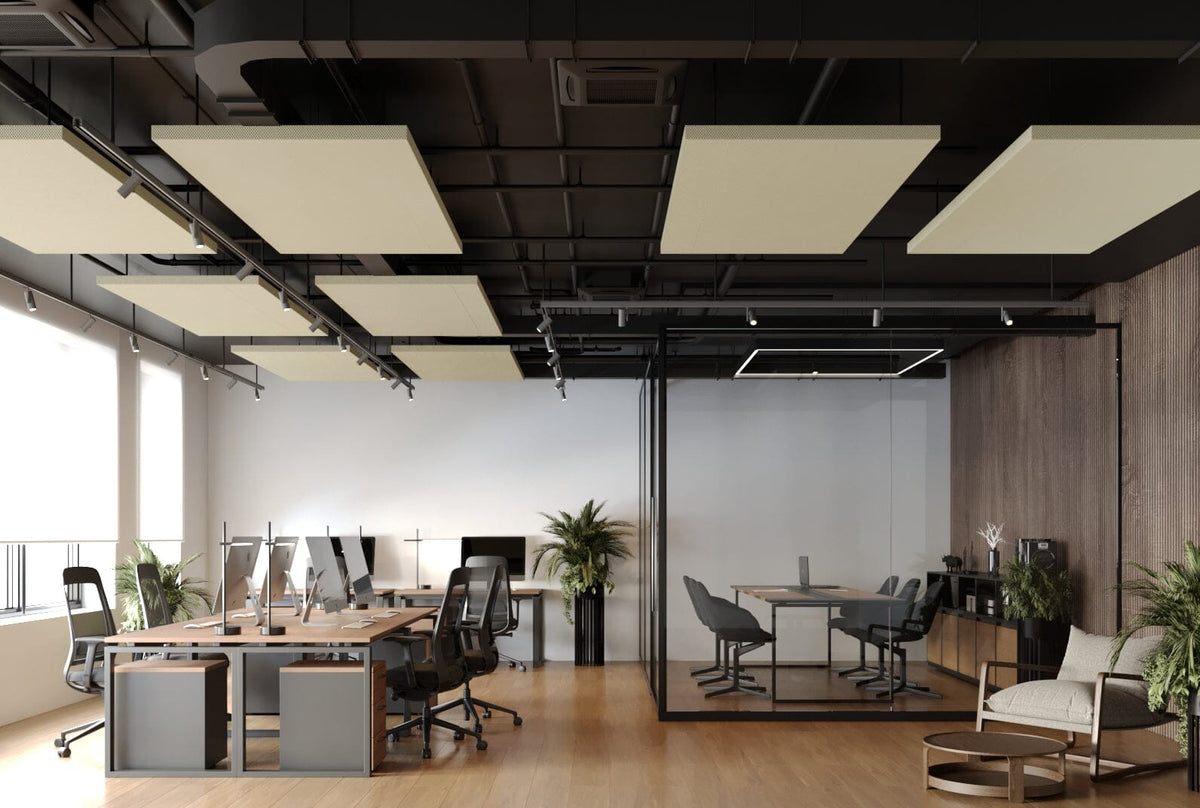
5. The Room Is Larger Or More Open Than It Appears
An open doorway, connected kitchen, tall ceiling, or long corridor can make the effective acoustic space larger than the seating area suggests. Sound is interacting with the connected volume, not the furniture layout shown on a floor plan.
When describing the room for a treatment plan, include connected spaces and ceiling height. Treating a small visual zone while ignoring the open volume can lead to an under-sized solution.
6. Furniture, Rugs, And Curtains Did Not Finish The Job
Soft furnishings can reduce some high-frequency reflections and make an empty room more comfortable. They are useful parts of the room, but their acoustic effect depends on material, thickness, size, and placement. A thin rug beneath a table or light curtains beside a large glass wall may not provide enough absorption to control speech reverberation.
If the room improved after furnishing but still feels sharp or tiring, purpose-built acoustic treatment can address the remaining wall and ceiling reflections more predictably.
7. The Problem Is Not Echo
A steady HVAC hum, traffic noise, computer fan, or mechanical vibration is background noise. Voices passing through a closed door are a sound-transfer problem. Acoustic panels can improve clarity inside the room, but they do not shut off equipment or seal construction gaps.
If privacy or noise leaking through a door is the concern, compare acoustic treatment and soundproofing. Overtone Soundproofing, including Soundproof Door Kits, Door Gasket Sets, and Automatic Door Bottoms, is the more relevant path for door leakage.
A Five-Minute Room Check
- Pause the equipment. Turn off fans, HVAC, and other controllable noise so you are evaluating the room rather than a machine.
- Listen from the working position. Speak or clap once near the desk, sofa, table, or recording position. Move a few feet and repeat.
- Inspect the reflection paths. Note large bare walls, opposing hard surfaces, windows, floors, and the ceiling above the active area.
- Test one surface temporarily. Hold a thick folded blanket against a suspected wall or place it over a hard table. A noticeable change helps identify a useful treatment zone; it is a test, not the finished solution.
- Document the room. Record dimensions, ceiling height, photos, and where the problem is strongest before selecting products.
Use the same listening position before and after each test. Changing several things at once makes it difficult to know which surface was responsible.
Choose The Overtone Solution By Room Problem
- For straightforward echo and speech clarity: use Overtone Acoustic Panels at the relevant wall reflection zones.
- For a guided Home Office setup: use Home Office Room Kits when you want coordinated treatment instead of selecting individual pieces.
- For overhead reflections or limited wall space: use Ceiling Treatments above the active area.
- For a design-sensitive wall: use Acoustic Art Panels when the treatment should read as artwork, or Wallscapes when it should become an architectural feature.
- For door leakage or privacy: use the appropriate Soundproof Door Kits, Door Gasket Sets, or Automatic Door Bottoms rather than expecting wall absorption to block transfer.
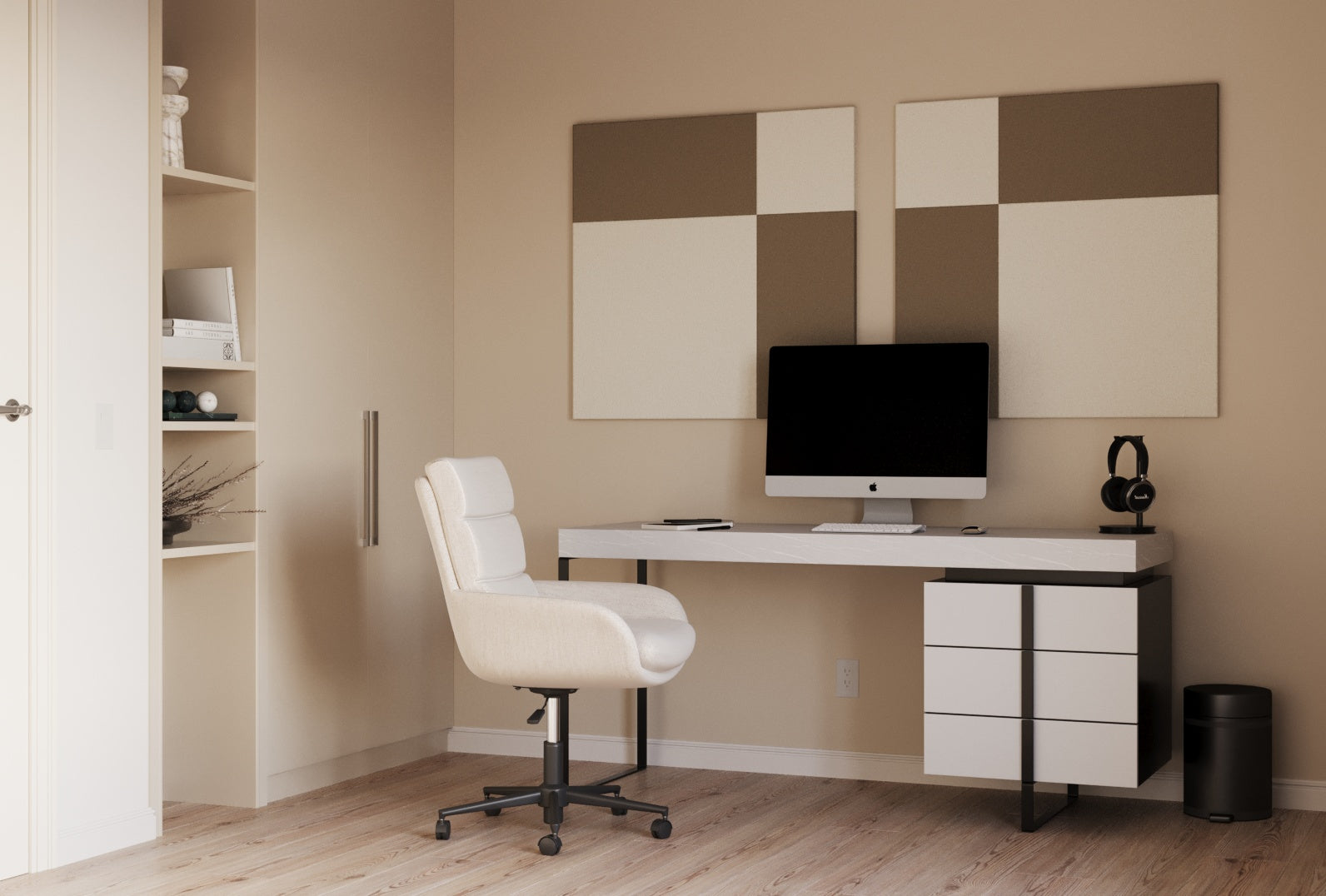
The recommendation can combine formats. A large office might use Overtone Acoustic Panels near the desk and Ceiling Treatments above a meeting area. A client-facing space may need the same acoustic coverage presented through Acoustic Art Panels or Wallscapes.

Common Mistakes That Leave Echo Behind
- Treating leftover wall space: panel placement should follow the sound source and listening position.
- Concentrating everything on one small wall: distributed treatment is often more useful when several large surfaces contribute.
- Ignoring ceiling height and connected rooms: both increase the volume that the plan must address.
- Expecting acoustic treatment to stop transfer: echo control and soundproofing solve different problems.
- Adding more before listening again: test the first useful zones, then adjust based on what remains.
Frequently Asked Questions
Why Does My Room Echo Even With Furniture?
Furniture may interrupt or absorb some reflections without providing enough coverage on the largest hard surfaces. Glass, bare walls, floors, and ceilings can still keep speech active after the room is furnished.
Why Do I Still Hear Echo After Installing Acoustic Panels?
The panels may provide too little coverage, miss the strongest reflection paths, or leave the ceiling untreated. Confirm the room dimensions, ceiling height, panel size, and placement before assuming the product is ineffective.
Where Should Acoustic Panels Go To Reduce Echo?
Begin around the primary speaking, listening, or recording position. Side walls, the wall behind or across from that position, large opposing surfaces, and the ceiling above are common areas to evaluate.
Can A Rug Or Curtains Stop Room Echo?
They can help, particularly in a very bare room, but the result depends on their area, thickness, and location. They may not replace purpose-built wall or ceiling treatment when the room remains highly reflective.
Do I Need Acoustic Treatment On The Ceiling?
Not every room does. Ceiling treatment becomes more relevant when the ceiling is high, wall space is limited, the floor and ceiling are both hard, or overhead reflections remain after useful wall areas are treated.
Will Acoustic Panels Stop Sound From Leaving The Room?
No. Acoustic panels reduce reflections inside the room. Sound leaving through a door, wall, ceiling, or floor is a soundproofing and construction issue.
Fix The Cause, Not Just The Empty Wall
A room that still echoes is giving you useful information: an active reflection path, a large untreated surface, insufficient coverage, or a different sound problem remains. Identify that cause before adding more treatment.
For a room-specific recommendation, request a Free Room Assessment. Share the room dimensions, ceiling height, photos, primary use, and what you hear so Overtone can recommend the appropriate product type, quantity, and placement.


